Common Failure Problems of Conveyor Idler Brackets
2026-08-31 15:01:43
Common Failure Problems of Conveyor Idler Brackets
Conveyor idler brackets are structural components that support carrying, return, impact, and self-aligning idlers. Although their construction is relatively simple, they operate under continuous loads and vibration. Bracket failure can cause idler misalignment, belt deviation, abnormal vibration, and even damage to the conveyor belt. Understanding common failure modes is important for improving conveyor reliability.
Welding Cracks and Joint Failure
Weld cracking is one of the most serious bracket failure modes. It may result from insufficient weld size, poor welding quality, excessive stress concentration, welding deformation, material defects, or repeated cyclic loading.
Cracks commonly appear around welded joints, reinforcement ribs, mounting areas, and corners. Regular visual inspection is recommended, particularly for brackets operating under heavy impact and continuous vibration.
Structural Deformation
Excessive loading or insufficient structural strength can cause bending, twisting, or permanent deformation of the bracket. Impact forces at loading points can be significantly higher than normal operating loads.
A deformed bracket may change the position or angle of the idler, resulting in uneven belt support and increased belt tracking problems. Heavy-duty and impact zones should therefore use appropriately reinforced bracket structures.
Corrosion and Section Loss
Moisture, coal dust, mineral slurry, and corrosive substances can accelerate corrosion. Severe corrosion reduces effective material thickness and structural strength, increasing the risk of deformation or fracture.
Proper surface treatment, such as painting, galvanizing, or other protective coatings, can improve corrosion resistance. Damaged protective coatings should be repaired promptly.
Mounting Hole and Fastener Problems
Mounting holes may become enlarged or deformed because of repeated vibration, excessive loads, or loose fasteners. Loose bolts can cause bracket movement, abnormal vibration, and progressive structural damage.
Fasteners should be regularly inspected and tightened according to the equipment requirements. Severely damaged holes or fasteners should be repaired or replaced rather than continuously reused.
Idler Misalignment
Incorrect bracket dimensions, manufacturing tolerances, installation errors, or structural deformation can cause the idler to become misaligned with the conveyor centerline.
Idler misalignment increases belt resistance and may contribute to belt deviation and uneven roller wear. Bracket position and geometry should therefore be checked whenever belt tracking problems occur.
Fatigue Failure
Conveyor brackets experience repeated loading during continuous operation. Even when the maximum load is below the material's static strength, cyclic stress can eventually cause fatigue cracks.
Areas with sharp corners, abrupt section changes, mounting holes, and welded joints are particularly important during fatigue evaluation. Rounded transitions and properly positioned reinforcement can help reduce stress concentrations.
Preventive Inspection and Improvement
Effective maintenance should include regular checks for cracks, deformation, corrosion, loose fasteners, damaged welds, and idler alignment. Failed brackets should be analyzed to identify the root cause rather than simply replacing them with identical components.
For heavy-duty mining conveyors, structural calculations, appropriate material selection, controlled welding, corrosion protection, and correct installation should be combined to achieve stronger, more durable, and more reliable idler support structures.
References
CEMA, Belt Conveyors for Bulk Materials.
ISO 5048, Continuous Mechanical Handling Equipment — Belt Conveyors with Carrying and Return Idlers.
ISO 3834, Quality Requirements for Fusion Welding of Metallic Materials.
ISO 5817, Welding — Fusion-Welded Joints in Steel — Quality Levels for Imperfections.
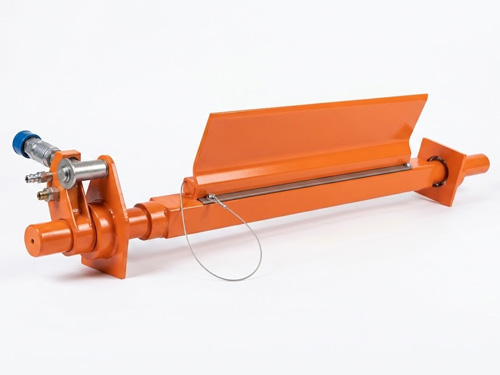
Heavy-Duty Primary Belt Cleaner Heavy-Duty Primary Belt Cleaners are robust conveyor belt c...
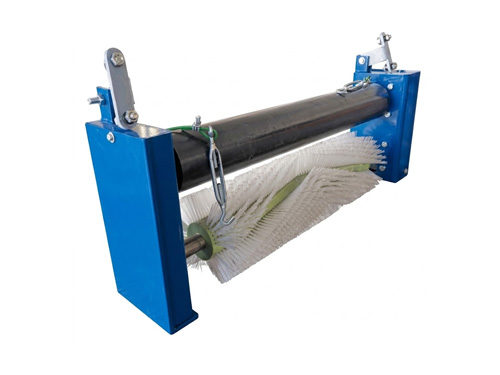
Self-Driven Rotary Brush Belt Cleaner Self-Driven Rotary Brush Belt Cleaners are specialize...
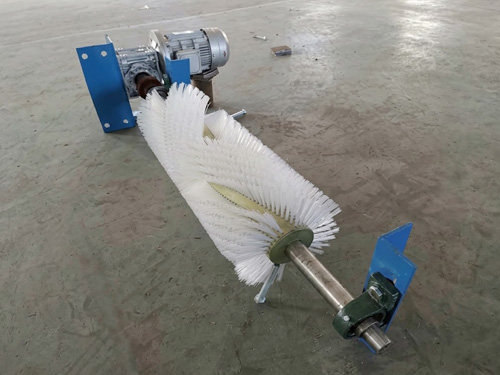
Brush Belt Cleaners in Various Models Brush Belt Cleaners are specialized conveyor belt cle...
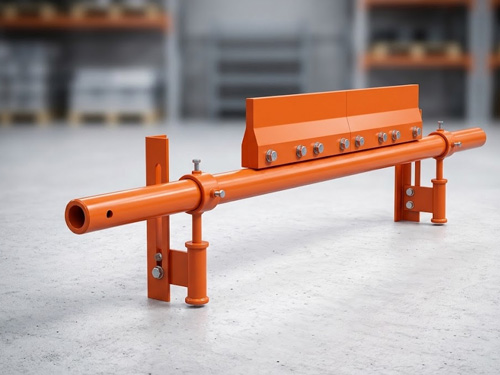
Secondary Conveyor Belt Cleaner Secondary Conveyor Belt Cleaners are designed to remove res...