Apron Belt Feeders: Feeding Heavy and Lumpy Material Under Control
2026-09-30 09:58:55
A hopper of run-of-mine ore will not flow through a belt feeder in any controlled way. The material bridges, it surges, it contains lumps large enough to destroy a rubber belt, and it arrives with enough impact energy to damage whatever sits below. The apron feeder exists for exactly this duty: a steel pan conveyor strong enough to take the load and slow enough to meter it out at a rate the downstream conveyor can accept.
How an Apron Feeder Is Put Together
The machine is a continuous loop of overlapping steel pans carried on a heavy-duty chain running over sprockets at each end. The pans overlap so that material cannot fall between them, and they are shaped with side flanges or welded skirts to contain the load on the inclined or horizontal run. Below the carrying run, the pans are supported by rollers or by a sliding bed, depending on the design and the load.
Drive is normally at the head (discharge) end, through a gearbox and motor, with variable speed control so the feed rate can be adjusted. On a feeder, speed control is the entire point — the machine is there to regulate flow, not simply to move material.
Why Not Just Use a Belt Feeder
A rubber belt feeder is cheaper and works well on fine, free-flowing material. It stops working when the material includes large lumps, is hot, is sharp, or is heavy enough to deform the belt between idlers. Lumps landing on a belt feeder damage the cover and, over time, the carcass.
Steel pans take that abuse. They also tolerate hot material — sinter, coke, clinker, calcined product — far better than any rubber belt can. And because the pan line is supported along its length rather than spaced on idlers, the load does not sag between support points, which is what lets an apron feeder run under a full hopper head without the material packing underneath.
Pans, Chains and the Wear Items
Pan construction is the first thing to check. Pan plate thickness, the profile of the overlap, and how the pan is fixed to the chain all determine how the machine handles impact. Heavier plate resists denting from large lumps; the overlap detail determines whether fines work their way between pans and cause the chain to run on abrasive material.
The chain is the highest-wear component and the one that decides maintenance cost. Track-type chain with hardened pins and bushings is standard on heavy-duty machines. Chain wear shows up as elongation, which then means the chain no longer meshes properly with the sprocket, and sprocket wear accelerates sharply once that starts. Keeping chain tension correct and monitoring elongation is the core of apron feeder maintenance.
Carry rollers or bed supports on the return side are the other wear point, and they should be specified with the same attention to sealing as conveyor idlers, since they work in the same dust.
Sizing From the Material, Not the Hopper
Feeder width is usually set by the largest lump — a common rule is a width at least two and a half to three times the maximum lump dimension, which prevents bridging across the hopper opening. Speed is set by the required tonnage at that width and bed depth.
The other input is the material's flow characteristics. Cohesive, wet material needs a wider hopper outlet and often a steeper hopper angle, and the feeder has to be able to start under a full head of material — a condition that puts a very high starting torque demand on the drive. Under-specifying the drive on starting torque is a classic error, and it usually shows up the first time the feeder is stopped with the hopper full.
Typical Applications
Apron feeders appear at primary crushing stations, under ore and coal stockpile hoppers, in cement plants feeding clinker and limestone, in metallurgical plants handling sinter and coke, and at ports and terminals reclaiming from under ground-level hoppers. They are also common under grizzly feeders where the oversize goes to a crusher.
Anywhere the material is heavy, abrasive, lumpy or hot and the flow rate needs controlling, an apron feeder is the usual answer.
What to Give a Manufacturer
To size a machine properly, a supplier needs bulk density, maximum lump size, required feed rate and whether it is fixed or variable, hopper outlet dimensions, material temperature, and whether the installation is horizontal or inclined. With those, a manufacturer with fabrication capability can build the pan width, chain size and drive rating to suit rather than offering a stock machine that happens to be close.
Spare parts planning is worth doing at purchase time. Chain, sprockets and pan assemblies are long-lead items, and specifying them with the machine avoids a mismatch later.
References
Conveyor Equipment Manufacturers Association (CEMA), Belt Conveyors for Bulk Materials, 7th Edition, 2014.
ISO 5048:1989, Continuous mechanical handling equipment — Belt conveyors with carrying idlers — Calculation of operating power and tensile forces, International Organization for Standardization.
DIN 22101:2011, Continuous conveyors — Belt conveyors for loose bulk materials — Basis for calculation and dimensioning, Deutsches Institut für Normung.
ASME B20.1-2021, Safety Standard for Conveyors and Related Equipment, American Society of Mechanical Engineers.
MSHA, Code of Federal Regulations, Title 30, Part 56 — Safety and Health Standards for Surface Metal and Nonmetal Mines, U.S. Department of Labor.
Author: Michael Trent — Technical Content Team, Conveyor Components Division
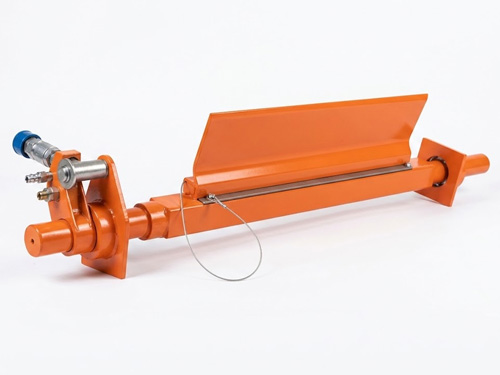
Heavy-Duty Primary Belt Cleaner Heavy-Duty Primary Belt Cleaners are robust conveyor belt c...
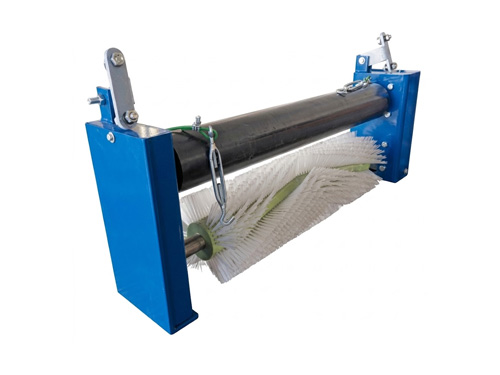
Self-Driven Rotary Brush Belt Cleaner Self-Driven Rotary Brush Belt Cleaners are specialize...
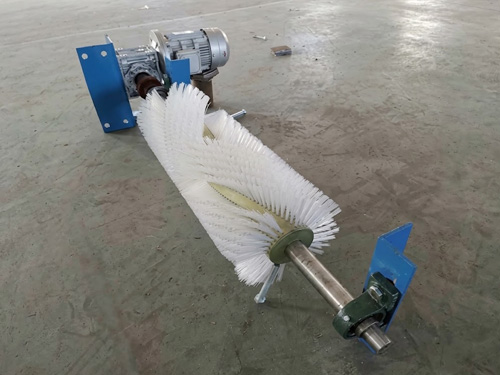
Brush Belt Cleaners in Various Models Brush Belt Cleaners are specialized conveyor belt cle...
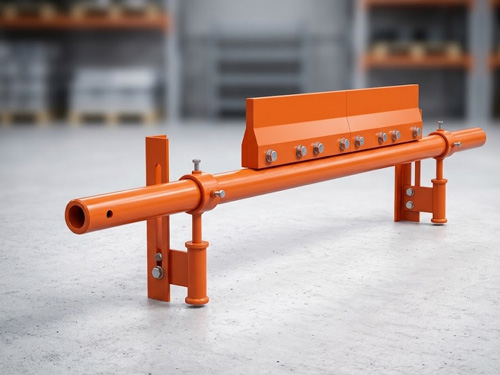
Secondary Conveyor Belt Cleaner Secondary Conveyor Belt Cleaners are designed to remove res...