Conveyor Idler Spare Parts Planning for Plant Operators
2026-11-04 19:23:46
Every plant with conveyors has an idler store, and most of them are wrong in the same two directions at once: too many variants, too few of the ones that actually get used. The result is a store full of rollers nobody needs and a production stoppage waiting on the one size that ran out. Fixing it is largely a matter of counting properly instead of ordering reactively.
Start With a Population Count
You cannot plan spares without knowing how many of each type are installed. Walk the conveyors and record, for every idler position: conveyor name, roller type, diameter, length, shaft size, bracket type and position in the conveyor. This is tedious and it is the foundation for everything else.
Most plants find the same thing when they do it for the first time: far more variants than expected, often because a previous project added a slightly different roller and nobody updated the standard. Twenty variants where five would do is typical. Tag each conveyor with a plate listing its idler specification and the count becomes maintainable rather than a one-off project.
Work Out the Real Consumption Rate
Consumption is best estimated from history rather than theory. Pull twelve months of issue records from the store and divide by the installed population. A figure of two to five percent of rollers replaced per year is normal for well-run conveyors; anything above eight percent suggests either a problem with the duty or with the rollers being supplied.
Then separate consumption by position. Loading zone impact rollers, return rollers on wet conveyors and any roller downstream of a badly set belt cleaner will consume far more than the average. Those positions deserve their own stock line rather than being buried in a general average.
Identify the Critical Spares
Not all idlers are equal in consequence. A failed carrying roller under a light load can wait until the next planned stop. A failed impact roller at a primary transfer point, or a drive pulley, can stop the plant. The critical list should be built from the consequence of failure, not from the cost of the part.
Two rules help. Any component with a lead time longer than the interval between planned shutdowns belongs in stock regardless of price. And any component whose failure stops a single-point-of-failure conveyor needs at least one on site, because a plant that cannot run while waiting for a delivery is a plant that will pay expedited freight anyway.
Standardise Aggressively
Consolidating variants is the highest-value action available and usually meets resistance from maintenance teams who have learned to work around the current mess. The technical argument is straightforward: where belt widths and loads are similar, one roller diameter and one shaft size can serve several conveyors.
Do it conveyor by conveyor rather than plant-wide. Pick the group with the most variants and the lowest duty, agree a standard, and let the non-standard stock run down. Repeat. Within two or three shutdown cycles a plant can typically halve its variants without any reduction in reliability.
Expect one side effect. Consolidation usually produces a short-term spike in consumption, because the new standard is being fitted to conveyors that were running something slightly different, and the first few failures have nothing to do with the roller. Budget for it, and don't abandon the standard on the strength of the first quarter's numbers.
Storage Conditions Matter More Than People Expect
Idlers are precision components that get stored like structural steel. Rollers stacked on their shells deform; a polymer or thin-wall steel shell left with a point load for a year will develop a flat spot, and a roller with a flat spot vibrates from installation onward. Store on racks, on the shaft or on the end caps, not on the shell.
Keep them dry and out of direct sun. Seals degrade in UV, and moisture drawn into a bearing during storage produces corrosion that shows up as an early failure months later. Rotating long-stored stock occasionally is worth the effort on slow-moving lines.
Ordering, Lead Time and Documentation
Keep a dimensioned drawing or a dimension sheet for every stocked idler, and keep a physical sample of each variant in the store. Drawings get lost and suppliers change; a sample on the shelf is the most reliable specification document a plant can hold.
When ordering, give the supplier the full specification rather than a part number that only your plant understands. Standard, impact, return, self-aligning and disc types each have their own parameters, and a supplier who receives the position in the conveyor as well as the dimensions can catch errors before the order is cut.
References
Conveyor Equipment Manufacturers Association (CEMA), Belt Conveyors for Bulk Materials, 7th Edition, 2014.
CEMA Standard No. 550, Classification and Definitions of Bulk Materials, Conveyor Equipment Manufacturers Association.
ISO 55000:2014, Asset management — Overview, principles and terminology, International Organization for Standardization.
DIN 22107, Continuous conveyors — Idler rollers for belt conveyors — Dimensions and requirements, Deutsches Institut für Normung.
ASME B20.1-2021, Safety Standard for Conveyors and Related Equipment, American Society of Mechanical Engineers.
Author: Michael Trent — Technical Content Team, Conveyor Components Division
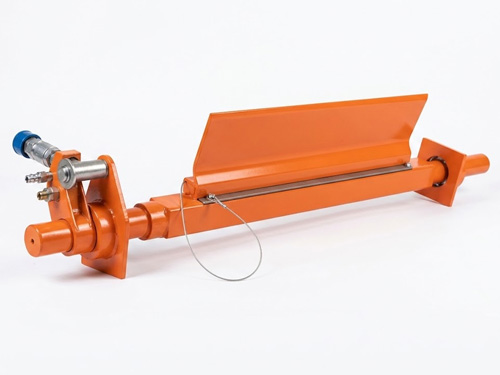
Heavy-Duty Primary Belt Cleaner Heavy-Duty Primary Belt Cleaners are robust conveyor belt c...
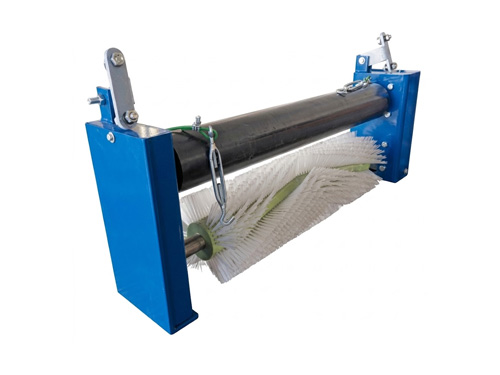
Self-Driven Rotary Brush Belt Cleaner Self-Driven Rotary Brush Belt Cleaners are specialize...
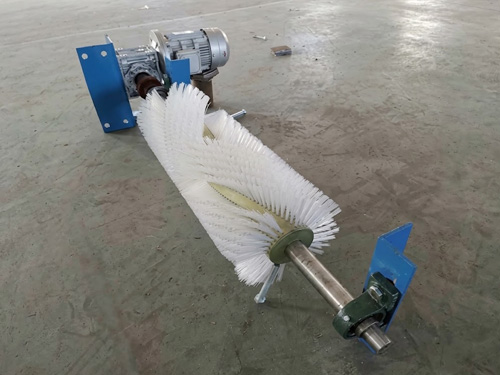
Brush Belt Cleaners in Various Models Brush Belt Cleaners are specialized conveyor belt cle...
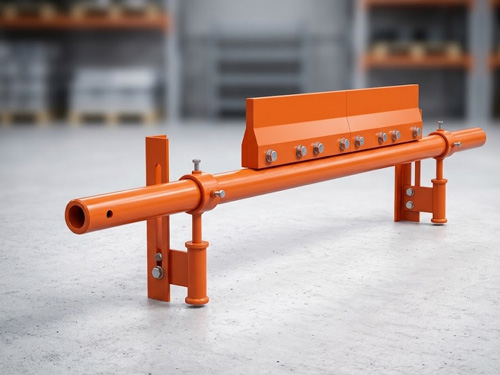
Secondary Conveyor Belt Cleaner Secondary Conveyor Belt Cleaners are designed to remove res...