Conveyor Idler Spacing and Belt Sag: Getting the Numbers Right
2026-11-04 19:23:46
Idler spacing looks like the easiest decision on a conveyor and is quietly one of the most consequential. Put the sets too far apart and the belt sags between them, material shifts toward the centre of each span, and the belt has to be strained back into shape at every roller — which costs power on every metre of every shift. Put them too close and you have doubled the capital cost and the maintenance burden for no benefit.
The Sag Criterion and Where It Comes From
The working rule in bulk conveyor design is that belt sag between idlers should not exceed about one to two percent of the span. One percent for a conveyor that must run smoothly and last, closer to two percent where cost pressure dominates and the belt can tolerate it.
The figure is not arbitrary. Sag is what happens when the belt's own tension is insufficient to carry the weight of the belt plus the material over that span. Express it as a ratio and you get a relationship between tension, load per unit length and span that is easy to solve for any one of the three. The standard texts set out the derivation in full, and the resulting formula is short enough to use on site.
Carrying and Return Spacing Are Different Problems
Carrying side spacing carries the material load plus the belt weight. Return side spacing carries the belt weight alone, which is why return spacing can be roughly double the carrying spacing on the same conveyor — typically around 3 m carrying against 6 m return on a medium-width belt, though the numbers move with belt tension and belt mass.
The mistake to avoid is scaling both from the same figure. A conveyor with 1.2 m carrying spacing does not want 1.2 m return spacing; it wants something closer to 2.4 to 3 m, and using the tighter figure everywhere adds rollers for no engineering reason.
Two Places Where Standard Spacing Is Wrong
The loading zone is the first. Impact loads are concentrated, and the belt needs support close together right under the chute — often half the normal spacing, or continuous support in the form of an impact bed. Carrying standard spacing through the loading point is a reliable way to damage both belt and rollers.
The transition from flat to troughed is the second. At the tail end the belt moves from a flat pulley onto the first troughed set, and the edges are being stretched as it goes. Spacing here should be graduated, with the first set at a shallower angle or further back, so the belt is not forced into full trough in one step.
What Happens When Spacing Is Too Wide
The visible effect is sag, and the material sliding toward the middle of each span. The less visible effects are worse. Sagging forces the belt to flex at every idler, and that flexing is the mechanism behind cover cracking and carcass fatigue. On a conveyor with 800 idlers and a belt running at 3 m/s, the belt is being flexed hundreds of times a minute, and a small increase in sag multiplies that strain.
There is also a power penalty. Belt indentation into the idler and the repeated lifting of the sagging belt both draw energy. The effect is small per idler and significant across a long conveyor running continuously.
Spacing on Inclined and Curved Sections
Inclined conveyors need closer spacing than horizontal ones at the same load, because the material's tendency to slide back adds a component the belt has to resist. On a steep incline the practical answer is often to reduce spacing by a third rather than to change the belt class.
Horizontal curves in the route are a separate case. The belt is being steered by the idler bank angle, and spacing there is set by the curve radius and the allowable edge stress rather than by sag. Curved sections usually need closer spacing and sometimes a different bracket type; it is not an area where a standard layout can be extrapolated.
Practical Checks Before You Order
Take the calculated spacing and check three things against it: does it clear the structure at the transition, does it fit round the chute and skirt geometry, and does it divide evenly into the conveyor length so the last span is not a short one carrying a full load.
Then check the roller rating against the actual load per set at that spacing. Halving the spacing halves the load per roller, which can let you use a lighter and cheaper roller — or, more often, reveals that the roller originally specified was being asked to carry more than its rating at the wider spacing.
References
Conveyor Equipment Manufacturers Association (CEMA), Belt Conveyors for Bulk Materials, 7th Edition, 2014.
ISO 5048:1989, Continuous mechanical handling equipment — Belt conveyors with carrying idlers — Calculation of operating power and tensile forces, International Organization for Standardization.
DIN 22101:2011, Continuous conveyors — Belt conveyors for loose bulk materials — Basis for calculation and dimensioning, Deutsches Institut für Normung.
AS 1755-2000, Conveyors — Safety requirements, Standards Australia.
ASME B20.1-2021, Safety Standard for Conveyors and Related Equipment, American Society of Mechanical Engineers.
Author: Michael Trent — Technical Content Team, Conveyor Components Division
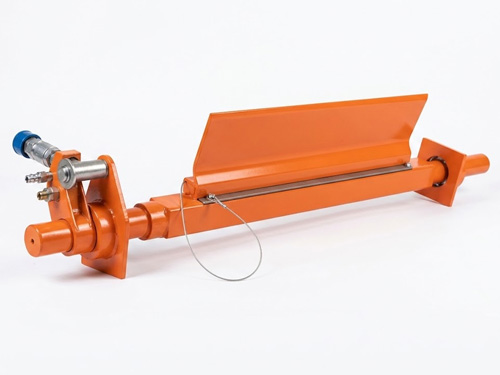
Heavy-Duty Primary Belt Cleaner Heavy-Duty Primary Belt Cleaners are robust conveyor belt c...
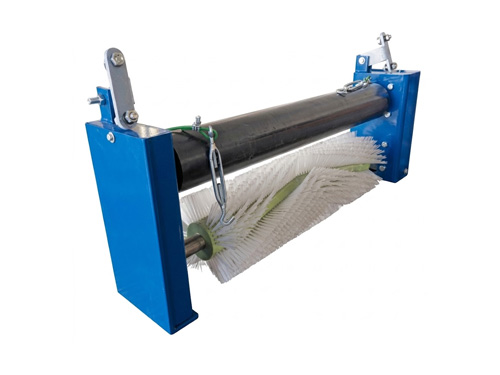
Self-Driven Rotary Brush Belt Cleaner Self-Driven Rotary Brush Belt Cleaners are specialize...
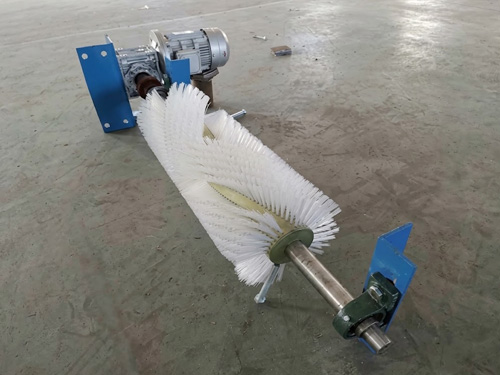
Brush Belt Cleaners in Various Models Brush Belt Cleaners are specialized conveyor belt cle...
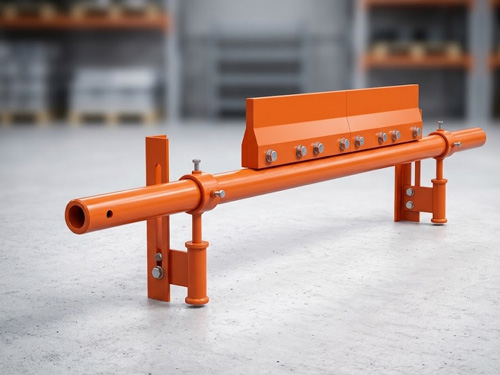
Secondary Conveyor Belt Cleaner Secondary Conveyor Belt Cleaners are designed to remove res...