How to Choose Conveyor Idlers for Bulk Material Handling
2026-09-30 10:07:02
Most conveyor idlers don't fail because they were badly made. They fail because someone picked them from a catalogue without looking at what the belt actually carries, how fast it runs, or what the loading point does to the shell. A quarry running damp limestone at 3.5 m/s puts a very different set of demands on a roller than a coal preparation plant moving dry fines at 1.6 m/s. Get the selection wrong and you pay twice — once for the replacement parts, once for the downtime around them.
Start With the Duty Conditions, Not the Drawing
Before anything else, write down four numbers: belt width, belt speed, bulk density of the material, and design throughput in tonnes per hour. From those you can derive the load on each idler set and the sensible spacing between sets. The standard calculation method published by the Conveyor Equipment Manufacturers Association is worth following rather than approximating.
Then note the awkward things that never appear on a drawing. Is the material abrasive enough to polish a shell in a year? Does it hold moisture and turn into paste on the return run? Is there a drop height at the loading point that throws shock loads into the carrying set? In practice these conditions decide the idler type far more than belt width ever does.
Roller Diameter, Shell Thickness and Speed
Roller diameter is normally chosen around belt speed and bearing life rather than static load. A 108 mm roller on a slow, lightly loaded line will run for years. Push the same roller to 5 m/s and the bearing's speed rating becomes the limiting factor, not the shell. Most suppliers publish rotational speed limits per diameter, and those numbers should be respected.
Shell thickness is the quiet variable. Two rollers can look identical on the outside and differ by a millimetre of wall thickness, which shows up much later as denting or cracking once heavy lumps land on the loading zone. Ask for the wall thickness in writing.
Trough Angle and Idler Set Configuration
The trough angle determines carrying capacity and how load is shared across the three rollers. Sets at 20° and 35° are the common choices; 45° appears where throughput matters more than belt life, because a steeper trough stresses the belt edges more. In a three-roll set the centre roller carries the majority of the load, so it is often the one specified with a heavier shell or a wider bearing.
Also worth checking: the transition distance at the head and tail pulleys. Forcing a belt from flat to a steep trough over too short a run stretches the edges and creates tracking trouble that no amount of idler adjustment will fix.
Where Sealing and Bearings Decide Service Life
Ask maintenance crews what kills an idler and most will say the bearing. Ask what kills the bearing and the answer is usually what got into it — dust, wash-down water, fine material working past the seal. Rarely overload.
Better designs use several stages in combination — a labyrinth path, a grease-filled cavity, and a contact lip seal behind that. The arrangement matters more than any single component. If the conveyor is washed down or runs through a wet tunnel, say so when ordering. A seal arrangement that lasts years in a dry cement plant can fail in months under a hose.
Matching Idler Type to Each Conveyor Section
A conveyor is not one machine; it is several sections with different problems. The loading zone wants impact idlers or a supported impact bed. The carrying run wants troughing sets at the correct spacing. The return side, especially with sticky material, benefits from self-cleaning spiral rollers or rubber-disc return rollers. And wherever the belt drifts, a self-aligning set costs far less than a torn belt edge.
Specifying a single idler type down the whole line is the most common shortcut on site, and reliably the most expensive one.
Standardising Spares Across the Plant
One habit that pays off: limit the number of idler variants you keep. Plants that accumulate a dozen different roller lengths and shaft configurations end up with a stores problem as much as a maintenance problem. Where the duty allows, consolidating onto two or three set types — one carrying, one return, one impact — keeps inventory usable and lets the crew swap parts between lines.
It also simplifies reordering, because the drawing on file with your supplier is one you have already proven in service.
Working Directly With the Factory
Idlers are a dimensional product. Shaft end profile, bracket slot width, drop-in span — the details that decide whether a replacement fits at two in the morning rarely show up in a generic specification. A manufacturer running its own machining and assembly line can build to your existing shaft dimensions and bracket geometry instead of making you modify the structure to suit a stock part.
When assessing a supplier, ask what is actually made in-house, what sealing arrangement is used, and whether they can build to your drawings. The answers tell you considerably more than a price list does.
References
Conveyor Equipment Manufacturers Association (CEMA), Belt Conveyors for Bulk Materials, 7th Edition, 2014.
ISO 5048:1989, Continuous mechanical handling equipment — Belt conveyors with carrying idlers — Calculation of operating power and tensile forces, International Organization for Standardization.
DIN 22101:2011, Continuous conveyors — Belt conveyors for loose bulk materials — Basis for calculation and dimensioning, Deutsches Institut für Normung.
DIN 22107, Continuous conveyors — Idler rollers for belt conveyors — Dimensions and requirements, Deutsches Institut für Normung.
ASME B20.1-2021, Safety Standard for Conveyors and Related Equipment, American Society of Mechanical Engineers.
Author: Michael Trent — Technical Content Team, Conveyor Components Division
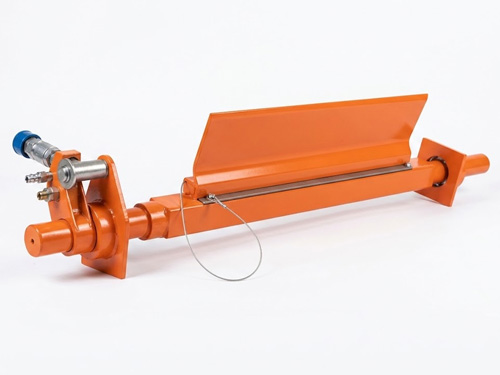
Heavy-Duty Primary Belt Cleaner Heavy-Duty Primary Belt Cleaners are robust conveyor belt c...
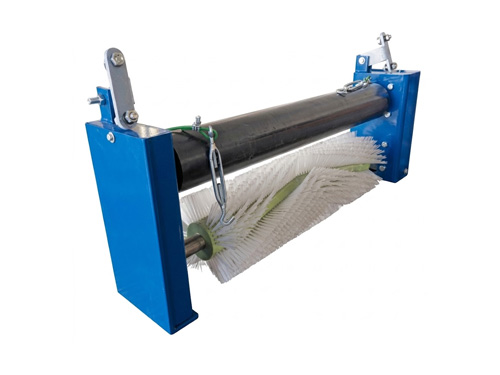
Self-Driven Rotary Brush Belt Cleaner Self-Driven Rotary Brush Belt Cleaners are specialize...
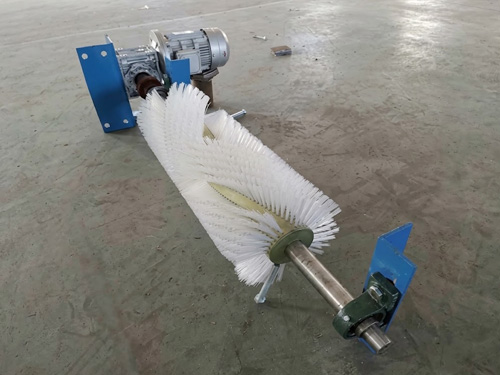
Brush Belt Cleaners in Various Models Brush Belt Cleaners are specialized conveyor belt cle...
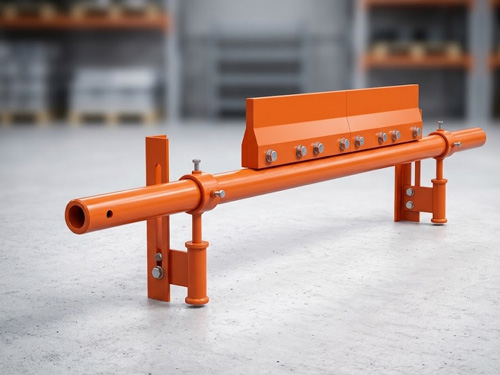
Secondary Conveyor Belt Cleaner Secondary Conveyor Belt Cleaners are designed to remove res...