Impact Idlers vs Impact Beds at Conveyor Loading Zones
2026-09-30 10:08:15
The loading point is where conveyor belts get damaged. Everything upstream — the chute, the transfer height, the lump size — concentrates into maybe two metres of belt, and the damage shows up as cut covers, torn splices, broken carcass and material spilling out along the skirt. Two products compete for that spot: impact idlers and impact beds. They are not really interchangeable, and picking the wrong one is a common source of recurring belt damage.
What Impact Idlers Actually Do
An impact idler looks like a conventional roller with a resilient outer layer, usually rubber rings or discs mounted along the shell. The rings deflect under load, and that deflection is what absorbs part of the impact energy before it reaches the belt carcass. The steel shaft and bearings underneath are standard, so the roller still rotates and still supports the belt between impacts.
The advantage is that they behave like normal idlers. They roll, they are easy to replace one at a time, and they fit existing brackets without structural change. On a conveyor with moderate drop heights and medium lump size, that is often exactly what is needed and nothing more.
How an Impact Bed Differs
An impact bed replaces the rotating rollers with a fixed support surface. A steel frame sits under the belt and carries a series of impact bars — typically a low-friction polymer top layer bonded to a rubber cushion. The belt slides over the bars rather than rolling over a roller.
Because the support is continuous rather than spaced, there are no gaps for the belt to sag into under load. That matters most where the drop height is significant or the lumps are large, because a belt forced into the gap between two rollers under a falling rock is being bent and stabbed at the same time. Continuous support removes the bending component entirely.
Where Each One Wins
Impact idlers suit conveyors with modest loading conditions: short transfer drops, screened material, relatively small top size, and moderate tonnage. They also suit plants where maintenance philosophy favours swapping single components quickly, since one failed roller does not require dismantling a frame.
Impact beds earn their place where the duty is genuinely severe — primary crushing discharge, run-of-mine transfers, high drop heights, or material with large sharp lumps. They are also the better answer where spillage and dust at the skirt are a problem, because the continuous surface gives the skirt sealing system something stable to seal against. Where belt sag between rollers has been letting fines escape, a bed usually fixes the sealing issue as a side effect.
The Skirt Sealing Connection
This is the point most specifications miss. Belt damage and spillage at the loading zone are usually the same problem seen from two angles. If the belt sags between idlers, skirt seals lose contact, fines escape, and the resulting dust creates both a housekeeping and a health exposure issue. Continuous support from an impact bed holds the belt in a flat, predictable line that skirt rubber can actually seal.
Fitting high-performance impact idlers while leaving the belt unsupported between them will not solve a chronic spillage complaint. The geometry has to change, not just the component.
Specifying by Duty, Not by Habit
A sensible approach is to work from the drop height and the lump size. Low drop and small lumps: impact idlers will usually do. Higher drop, bigger lumps, or a history of belt damage at the same point: an impact bed is the more reliable answer even though the initial cost is higher. The calculation is straightforward when you put belt replacement cost and downtime next to the price difference.
Also check the impact bar top layer material. A low-friction polymer surface reduces drag and heat build-up compared with plain rubber, which matters on high-speed belts where continuous sliding contact generates heat.
Practical Notes on Installation and Supply
Whichever route you take, the loading zone should be treated as a system: adequate support, correct skirt sealing, and enough spacing to let the belt settle before the first standard troughing set. Retrofitting a bed into an existing structure usually means checking frame height, since the bed sits slightly differently to a roller line.
A manufacturer supplying both products can quote the duty properly rather than pushing whichever item is in stock. When you approach a supplier, give them the drop height, top lump size, belt width, belt speed and tonnage — with those five numbers a competent factory can size the loading zone without a site visit.
References
Conveyor Equipment Manufacturers Association (CEMA), Belt Conveyors for Bulk Materials, 7th Edition, 2014.
ISO 5048:1989, Continuous mechanical handling equipment — Belt conveyors with carrying idlers — Calculation of operating power and tensile forces, International Organization for Standardization.
DIN 22101:2011, Continuous conveyors — Belt conveyors for loose bulk materials — Basis for calculation and dimensioning, Deutsches Institut für Normung.
MSHA, Code of Federal Regulations, Title 30, Part 56 — Safety and Health Standards for Surface Metal and Nonmetal Mines, U.S. Department of Labor.
ASME B20.1-2021, Safety Standard for Conveyors and Related Equipment, American Society of Mechanical Engineers.
Author: Michael Trent — Technical Content Team, Conveyor Components Division
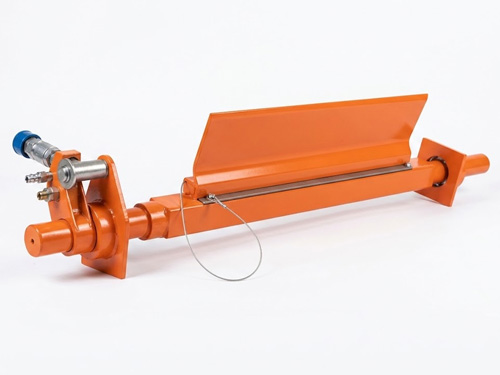
Heavy-Duty Primary Belt Cleaner Heavy-Duty Primary Belt Cleaners are robust conveyor belt c...
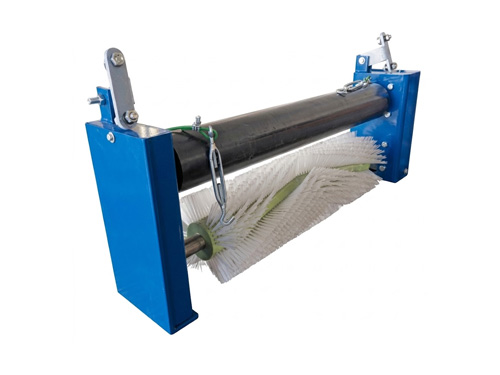
Self-Driven Rotary Brush Belt Cleaner Self-Driven Rotary Brush Belt Cleaners are specialize...
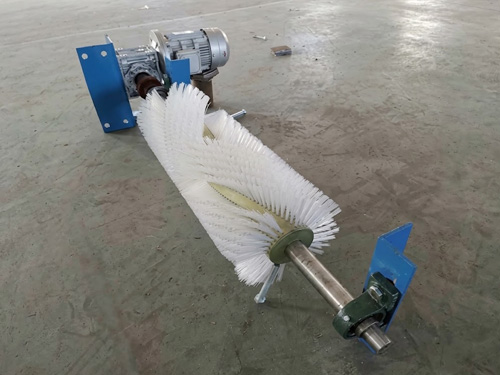
Brush Belt Cleaners in Various Models Brush Belt Cleaners are specialized conveyor belt cle...
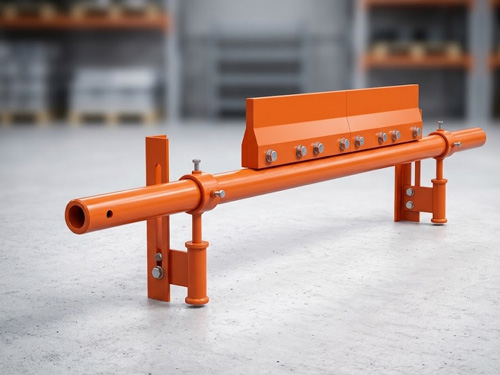
Secondary Conveyor Belt Cleaner Secondary Conveyor Belt Cleaners are designed to remove res...