Self-Aligning Idlers for Conveyor Belt Mistracking Correction
2026-09-30 10:12:14
A drifting belt is rarely mysterious. It is usually one of four things: the material is loading off-centre, a structure has moved, buildup has changed a roller's effective diameter, or the belt splice is not square. What makes mistracking expensive is not the drift itself but what it leads to — a belt edge riding against structure, tearing, and dumping material for the length of the conveyor. Self-aligning idlers exist to catch the drift before it reaches that stage.
What Causes a Belt to Run Off Centre
Start with loading. If material consistently lands to one side of the belt, the belt will steer away from the loaded side, and no amount of idler adjustment downstream will hold it. Off-centre chute loading is probably the single most common cause and the least glamorous to fix.
Structural issues come next: a frame knocked out of square, a footing that has settled, or a pulley that has shifted on its shaft. Buildup is the third — a return roller coated with wet fines effectively grows in diameter on one side and steers the belt. Finally, belts themselves vary. A splice cut out of square, or a belt with a slight camber from manufacture, will track to one side no matter how good the structure is.
How Friction Self-Aligning Idlers Work
A friction-type self-aligning idler carries two small friction rollers mounted at an angle on either side of the main roll, on a pivoting frame. When the belt drifts far enough to contact one of them, the contact force rotates the whole assembly slightly about its vertical pivot. That skew generates a lateral component in the idler's rolling direction, which pushes the belt back toward centre.
The mechanism is entirely mechanical and needs no power or sensor. It responds proportionally — the further the belt drifts, the more correction is applied. That is why these units are described as training idlers rather than guides: they steer, they don't force.
Tapered and Other Configurations
Tapered self-aligning idlers take a different approach. The roller body is turned with a taper toward each end, so the surface speed varies across the face. When the belt moves off centre onto the larger-diameter section, the differential surface speed generates a steering force back toward centre. There is no separate friction roller and no pivoting sub-frame, which makes the unit simpler and less prone to seizing in dusty conditions.
Both types are built for carrying and return sides, and both are available in the imperial size ranges that suit conveyors designed to North American practice as well as in metric dimensions. Some designs combine a tapered body with side guide rollers for conveyors that reverse direction, since a plain training idler only corrects in one direction of travel.
Placement Along the Conveyor
More is not better. A conveyor fitted with training idlers every ten metres will have the units fighting each other, and the belt will weave rather than settle. Typical practice is one self-aligning set roughly every 30 to 45 metres on the carrying side, and a similar spacing on the return run, with extra units where the belt has a known problem — near load zones, just before the head pulley, or where the conveyor changes direction horizontally.
The unit closest to the head pulley does the most work in practice, because it is the last chance to correct before the belt wraps onto the pulley and any residual error translates directly into edge stress.
What Training Idlers Cannot Fix
Worth being blunt about this: a self-aligning idler manages drift, it does not cure the cause. If the chute is loading off-centre, if the belt is cambered, or if the structure is out of alignment, a training idler will hold the belt and hide the problem until the unit itself wears out. Maintenance teams that rely on them exclusively end up replacing training idlers regularly and never solving anything.
The correct sequence is to fix the loading and structural issues first, then fit training idlers to handle the residual drift that no structure is perfectly free of.
Specifying and Sourcing
When ordering, the details that matter are belt width, the side (carrying or return), trough angle on the carrying side, and whether the conveyor reverses. Sealing quality deserves attention here more than on a standard idler, because the pivot mechanism on friction types only works if it can still move — a seized pivot is worse than no training idler at all, since it holds a fixed skew.
A manufacturer that builds both standard and self-aligning idlers in the same factory can usually match the mounting footprint to your existing frames, which avoids structural work during a retrofit.
References
Conveyor Equipment Manufacturers Association (CEMA), Belt Conveyors for Bulk Materials, 7th Edition, 2014.
ISO 5048:1989, Continuous mechanical handling equipment — Belt conveyors with carrying idlers — Calculation of operating power and tensile forces, International Organization for Standardization.
DIN 22101:2011, Continuous conveyors — Belt conveyors for loose bulk materials — Basis for calculation and dimensioning, Deutsches Institut für Normung.
ASME B20.1-2021, Safety Standard for Conveyors and Related Equipment, American Society of Mechanical Engineers.
ISO 251:2004, Conveyor belts with textile carcass — Widths and lengths, International Organization for Standardization.
Author: Michael Trent — Technical Content Team, Conveyor Components Division
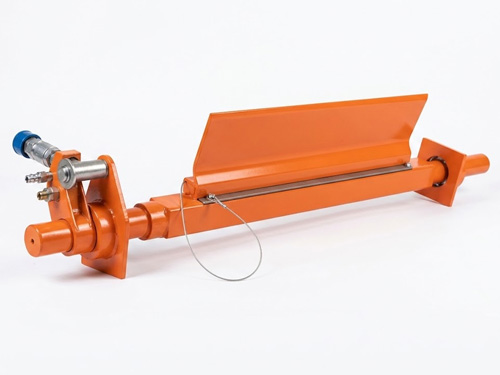
Heavy-Duty Primary Belt Cleaner Heavy-Duty Primary Belt Cleaners are robust conveyor belt c...
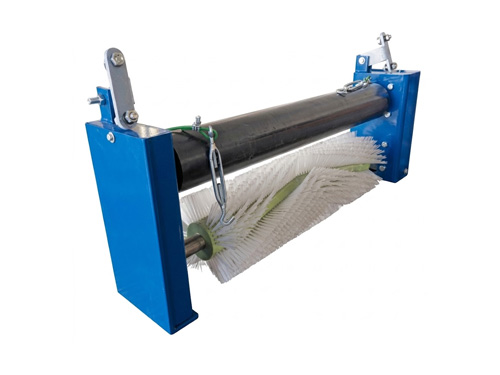
Self-Driven Rotary Brush Belt Cleaner Self-Driven Rotary Brush Belt Cleaners are specialize...
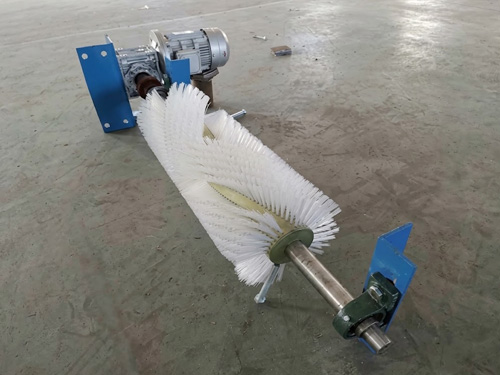
Brush Belt Cleaners in Various Models Brush Belt Cleaners are specialized conveyor belt cle...
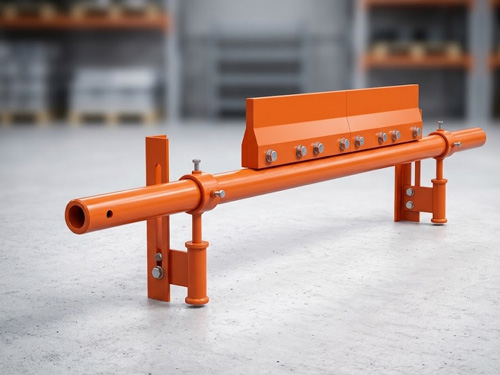
Secondary Conveyor Belt Cleaner Secondary Conveyor Belt Cleaners are designed to remove res...