Polymer Low-Noise Idlers: Where They Beat Steel Rollers
2026-09-30 10:10:34
Non-metallic rollers have been available for years and still meet scepticism, mostly because early versions had genuine problems with heat and load. The current generation of engineering polymer rollers is a different product, and on the right duty it outperforms steel on measures that matter to plant operators — noise, corrosion, belt wear and energy. Knowing where the limits are is the useful part.
What Actually Changes When the Shell Is Polymer
The obvious change is mass. A polymer shell weighs a fraction of an equivalent steel tube, which reduces the rotating inertia of the roller. That shows up as lower running resistance, particularly on long conveyors where the drive power needed to overcome idler drag is a real component of the total.
The second change is surface behaviour. Polymer surfaces are non-wetting compared with steel, so wet fines and clay adhere less readily. In practical terms that means less buildup on return rollers and less of the eccentric-roller problem that leads to belt tracking trouble. The material also does not rust, which matters enormously on wash-down lines, coastal plants and any conveyor handling salt or corrosive process material.
Noise Is Not a Soft Benefit
On a conveyor running several hundred rollers at 4 m/s, the cumulative sound from steel-on-belt contact and bearing rumble is substantial. Noise exposure limits are enforced in most jurisdictions, and a long gallery of conveyors can be the dominant source on a plant.
Polymer shells damp the contact noise rather than amplifying it, and measured reductions compared with steel rollers are significant enough to matter in enclosed galleries and transfer houses. For plants running near residential boundaries or with extended shift exposure, this alone can justify the change — and it is a benefit that no amount of maintenance on steel rollers will produce.
Wear Resistance and Belt Life
The claim that needs qualifying is wear resistance. A polymer shell will not outlast a steel shell against sharp, heavy lumps at a loading point — steel wins there and should be used there. Where polymer does well is against continuous abrasive sliding contact with fine material, where the combination of a smooth, hard, low-friction surface means it wears slowly and, more importantly, causes less wear on the belt cover.
Belt cover wear is the expensive side of the equation. A belt costs far more than the rollers under it, so a roller material that is gentler on the belt has an economic case even if the roller itself is not the longest-lived option.
Where Steel Still Wins
Be honest about the limits. High-impact loading zones should keep steel or rubber-cushioned impact rollers. Very high belt speeds with heavy loads generate heat at the belt-roller contact, and polymer's lower thermal conductivity means that heat is not carried away as effectively as with a steel shell — a consideration on heavily loaded fast belts.
High ambient temperature is the other constraint. Polymer rollers have a service temperature ceiling well below steel's, and a conveyor in a hot process area needs checking against it. Direct flame or radiant heat from a nearby process is also a hard no.
Electrical and Safety Considerations
On underground or combustible-dust applications, antistatic behaviour matters. A non-metallic roller that accumulates static charge is a hazard in a dusty environment, so any polymer roller specified for those duties needs to be supplied with antistatic or conductive additives and tested accordingly. Reputable manufacturers can state the surface resistivity of the material they use; if a supplier cannot, that is worth noting.
Fire resistance is the parallel requirement underground, where standards call for self-extinguishing materials. This is a specification item, not an optional extra.
Handling, Storage and Installation
One practical difference that catches people out: polymer shells deform under sustained point loading. Stacking rollers on their shells in a hot container for months will leave flat spots, and a roller with a flat spot vibrates from the day it is installed. Store them on their shafts or on racks, and out of direct sun.
Handling on site is the same story. Polymer rollers tolerate impact better than people expect in service, but a roller dropped edge-on onto concrete can crack a shell. It is not a fragility problem so much as a habits problem, and it is worth a line in the storeman's instructions.
Making the Change on an Existing Line
The simplest retrofit is the return side. Return rollers see far lower load than carrying rollers, so the duty is well within polymer capability and the corrosion and buildup benefits show up quickly. Carrying side retrofits are also viable but should be done with the load and speed checked against the roller rating first.
Supply is through the same channel as standard idlers — a manufacturer producing both ranges can supply polymer rollers built to the same shaft dimensions and mounting geometry as the steel rollers they replace, so a trial can be run on one conveyor section before committing the whole line.
References
Conveyor Equipment Manufacturers Association (CEMA), Belt Conveyors for Bulk Materials, 7th Edition, 2014.
ISO 284:2012, Conveyor belts — Electrical conductivity — Specification and test method, International Organization for Standardization.
ISO 340:2013, Conveyor belts — Laboratory scale flammability characteristics — Requirements and test method, International Organization for Standardization.
DIN 22107, Continuous conveyors — Idler rollers for belt conveyors — Dimensions and requirements, Deutsches Institut für Normung.
ASME B20.1-2021, Safety Standard for Conveyors and Related Equipment, American Society of Mechanical Engineers.
Author: Michael Trent — Technical Content Team, Conveyor Components Division
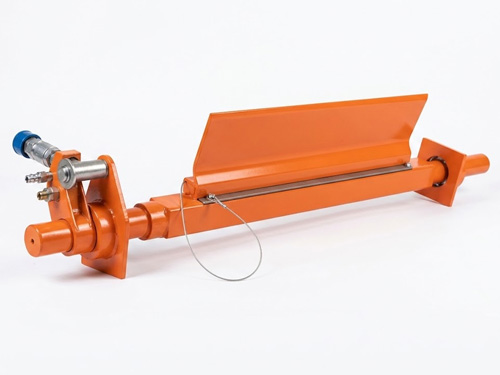
Heavy-Duty Primary Belt Cleaner Heavy-Duty Primary Belt Cleaners are robust conveyor belt c...
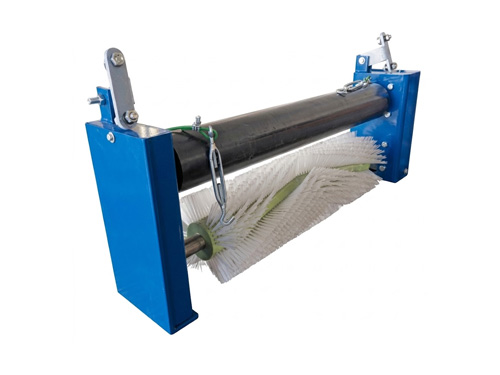
Self-Driven Rotary Brush Belt Cleaner Self-Driven Rotary Brush Belt Cleaners are specialize...
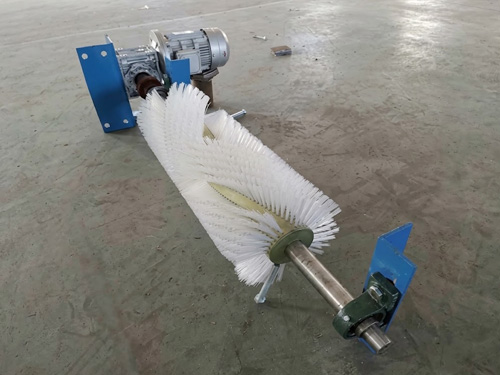
Brush Belt Cleaners in Various Models Brush Belt Cleaners are specialized conveyor belt cle...
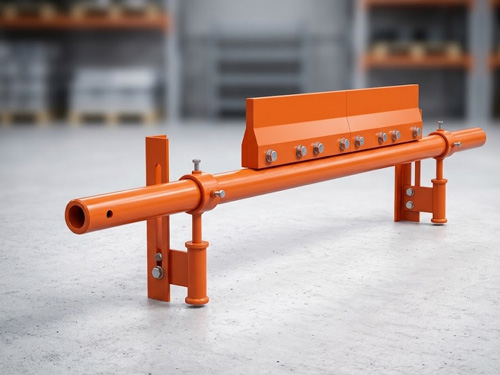
Secondary Conveyor Belt Cleaner Secondary Conveyor Belt Cleaners are designed to remove res...