Welding Process for Conveyor Idler Brackets
2026-08-31 15:00:26
Welding Process for Conveyor Idler Brackets
Conveyor idler brackets are important structural components used to support carrying, return, impact, and self-aligning idlers. Their welding quality directly affects idler alignment, conveyor belt tracking, structural stability, and long-term service life. A controlled welding process is therefore essential for producing reliable conveyor support structures.
Material Preparation and Cutting
The manufacturing process begins with suitable structural steel selected according to the required load capacity and operating environment. Steel plates, sections, and other profiles should be inspected before processing.
Components are cut according to approved drawings, and dimensional accuracy and edge quality should be controlled. Burrs, rust, oil, and other contaminants should be removed from the welding areas to ensure stable weld formation.
Component Positioning and Fixture Assembly
Before welding, individual bracket components should be positioned using appropriate fixtures or assembly tools. The fixture should maintain the required dimensions, angles, centerline, and mounting-hole positions.
Accurate positioning is particularly important for idler brackets because dimensional errors can cause the rollers to become misaligned after installation. The assembly should be checked before permanent welding begins.
Welding Preparation
Welding parameters should be selected according to the material thickness, joint design, welding method, and applicable production requirements. Depending on the bracket structure, processes such as shielded metal arc welding or gas-shielded welding may be used.
Where required, preheating and controlled interpass temperatures should be applied according to the material and welding procedure. The welding area should remain clean and protected from excessive moisture and contamination.
Welding Sequence and Deformation Control
A suitable welding sequence helps minimize thermal deformation. Symmetrical welding, controlled heat input, and properly distributed weld passes can reduce distortion and maintain bracket geometry.
For larger or reinforced brackets, welding should be carried out progressively rather than concentrating excessive heat in one area. Temporary fixtures may be retained until sufficient weld strength has developed.
Weld Quality Inspection
After welding, the bracket should undergo visual and dimensional inspection. Check for cracks, undercut, porosity, incomplete fusion, excessive spatter, weld deformation, and dimensional deviation.
Critical welded structures may require additional non-destructive testing according to project requirements. Mounting dimensions and idler centerline positions should also be verified before surface treatment.
Surface Treatment and Finishing
After inspection, welding spatter and surface contaminants should be removed. Depending on the application, the bracket may undergo shot blasting, painting, galvanizing, or other corrosion-protection treatment.
Uniform surface treatment helps protect the bracket against moisture, dust, and corrosion, particularly in outdoor or mining environments.
Quality Control and Installation
Finished brackets should be stored properly to prevent deformation and corrosion. During conveyor installation, the brackets must be securely fixed and correctly aligned with the conveyor centerline.
High-quality welding combined with accurate fabrication and installation helps ensure stable idler support, reliable belt tracking, and reduced vibration during conveyor operation.
References
CEMA, Belt Conveyors for Bulk Materials.
ISO 3834, Quality Requirements for Fusion Welding of Metallic Materials.
ISO 9606-1, Qualification Testing of Welders — Fusion Welding — Part 1: Steels.
ISO 5817, Welding — Fusion-Welded Joints in Steel, Nickel, Titanium and Their Alloys — Quality Levels for Imperfections.
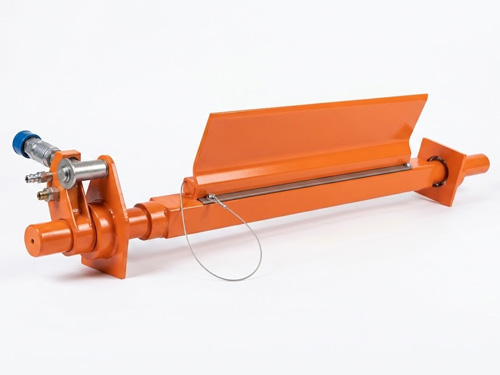
Heavy-Duty Primary Belt Cleaner Heavy-Duty Primary Belt Cleaners are robust conveyor belt c...
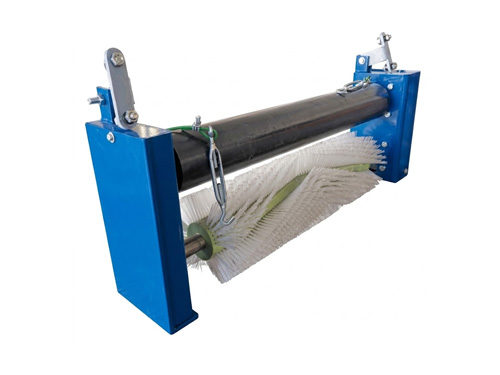
Self-Driven Rotary Brush Belt Cleaner Self-Driven Rotary Brush Belt Cleaners are specialize...
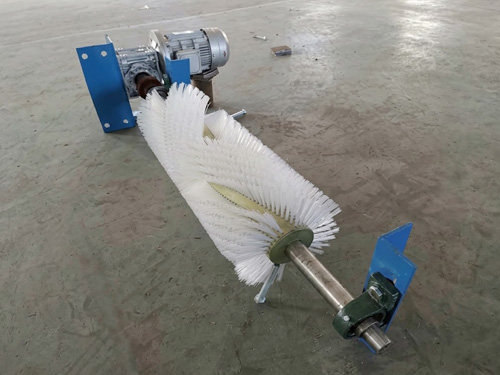
Brush Belt Cleaners in Various Models Brush Belt Cleaners are specialized conveyor belt cle...
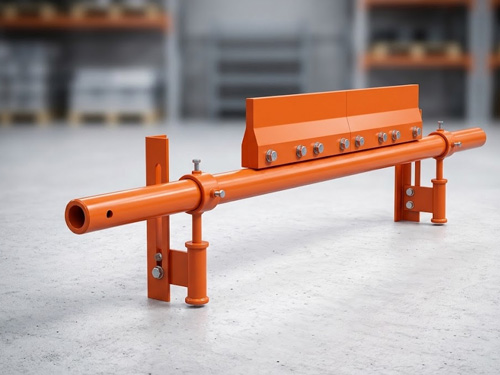
Secondary Conveyor Belt Cleaner Secondary Conveyor Belt Cleaners are designed to remove res...