Strength Verification and Structural Optimization of Idler Brackets for Heavy-Duty Mining Conveyors
2026-08-31 15:00:42
Strength Verification and Structural Optimization of Idler Brackets for Heavy-Duty Mining Conveyors
In heavy-duty mining conveyors, idler brackets are subjected to belt load, material weight, impact forces, vibration, and dynamic loads. A bracket that is insufficiently designed may deform, crack, or lose alignment, affecting belt tracking and idler performance. Strength verification and structural optimization are therefore essential for reliable conveyor operation.
Load Conditions for Strength Verification
The first step is to determine the loads acting on the idler bracket. The calculation should consider belt weight, conveyed material, idler weight, belt tension, impact loads, and dynamic effects.
Loading conditions are different between normal conveying sections and transfer zones. Impact brackets installed beneath loading points should account for the additional forces generated when large or heavy material falls onto the belt.
For heavy-duty applications, appropriate safety factors should be incorporated into the design according to project requirements and applicable engineering standards.
Material and Section Selection
The bracket material should provide sufficient yield strength, weldability, toughness, and corrosion resistance for the operating environment. Structural steel is commonly used for mining conveyor brackets because of its strength and fabrication characteristics.
Plate thickness and section dimensions should be selected according to calculated loads rather than simply increasing material thickness. Excessive material can increase weight and manufacturing costs without providing proportional benefits.
Stress and Deformation Analysis
Strength verification should evaluate the bracket under relevant load cases. Important results include maximum stress, deformation, weld stress, bolt loads, and local stress concentration.
Finite element analysis can be used to identify high-stress areas around mounting holes, corners, welded joints, and changes in section geometry. The analysis should consider realistic boundary conditions and load distribution.
Structural Optimization
Structural optimization should focus on improving load transfer while controlling weight. Reinforcing ribs, gussets, rounded transitions, optimized plate geometry, and improved support arrangements can reduce local stress concentrations.
Sharp corners should be avoided where possible because they can create stress concentrations. Reinforcement should be positioned according to the actual load path rather than added indiscriminately.
Welding and Connection Design
Welded joints are critical because bracket loads are transferred through these connections. Weld size and joint configuration should provide adequate strength while avoiding excessive heat input and distortion.
For bolted structures, bolt grade, bolt diameter, hole dimensions, preload, and connection stiffness should be verified according to the calculated loads.
Fatigue and Dynamic Loading
Mining conveyors operate for long periods and may experience repeated cyclic loading. Therefore, static strength alone is not sufficient. Fatigue performance should be considered, particularly around welded joints and areas subject to repeated vibration.
Reducing stress concentrations and improving weld quality can contribute significantly to long-term structural durability.
Verification and Field Improvement
After optimization, the bracket should undergo dimensional inspection and, where appropriate, prototype or load testing. Field inspection should focus on cracks, permanent deformation, loose fasteners, weld deterioration, and abnormal idler alignment.
Actual operating data can be used to further refine the structural design and improve future bracket configurations.
Comprehensive Optimization Strategy
A reliable mining idler bracket should achieve a balance between strength, stiffness, fatigue resistance, manufacturing cost, weight, and installation convenience. Combining engineering calculations, finite element analysis, controlled welding, and field feedback provides an effective approach to developing durable heavy-duty conveyor brackets.
References
CEMA, Belt Conveyors for Bulk Materials.
ISO 5048, Continuous Mechanical Handling Equipment — Belt Conveyors with Carrying and Return Idlers.
ISO 3834, Quality Requirements for Fusion Welding of Metallic Materials.
ISO 5817, Welding — Fusion-Welded Joints in Steel — Quality Levels for Imperfections.
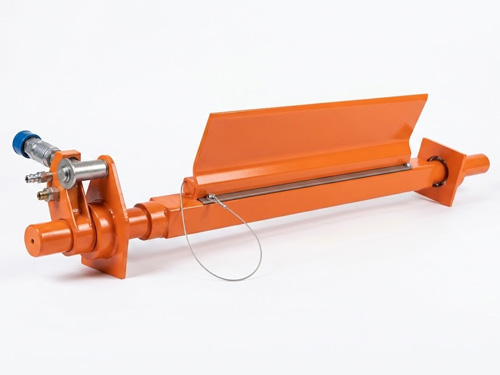
Heavy-Duty Primary Belt Cleaner Heavy-Duty Primary Belt Cleaners are robust conveyor belt c...
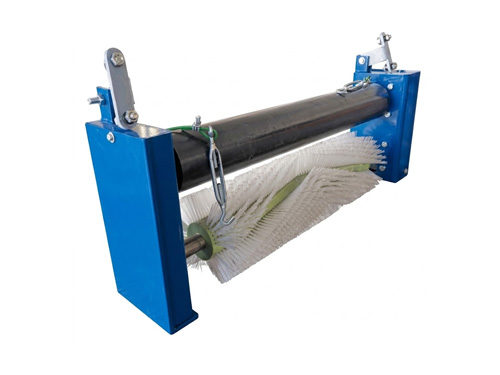
Self-Driven Rotary Brush Belt Cleaner Self-Driven Rotary Brush Belt Cleaners are specialize...
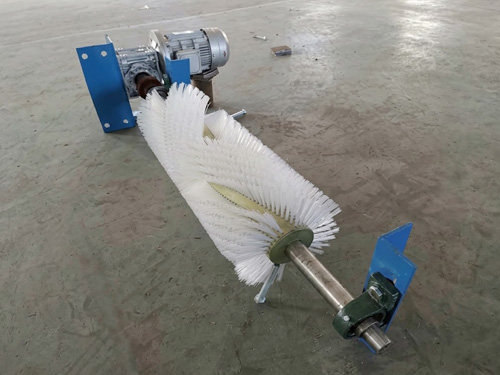
Brush Belt Cleaners in Various Models Brush Belt Cleaners are specialized conveyor belt cle...
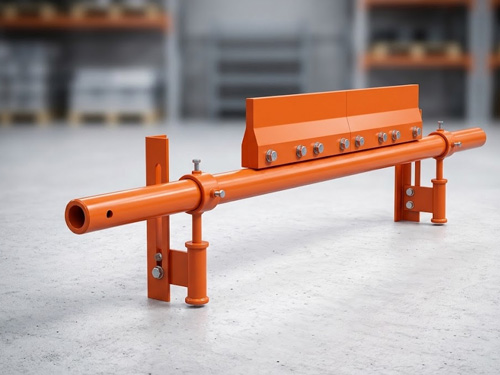
Secondary Conveyor Belt Cleaner Secondary Conveyor Belt Cleaners are designed to remove res...